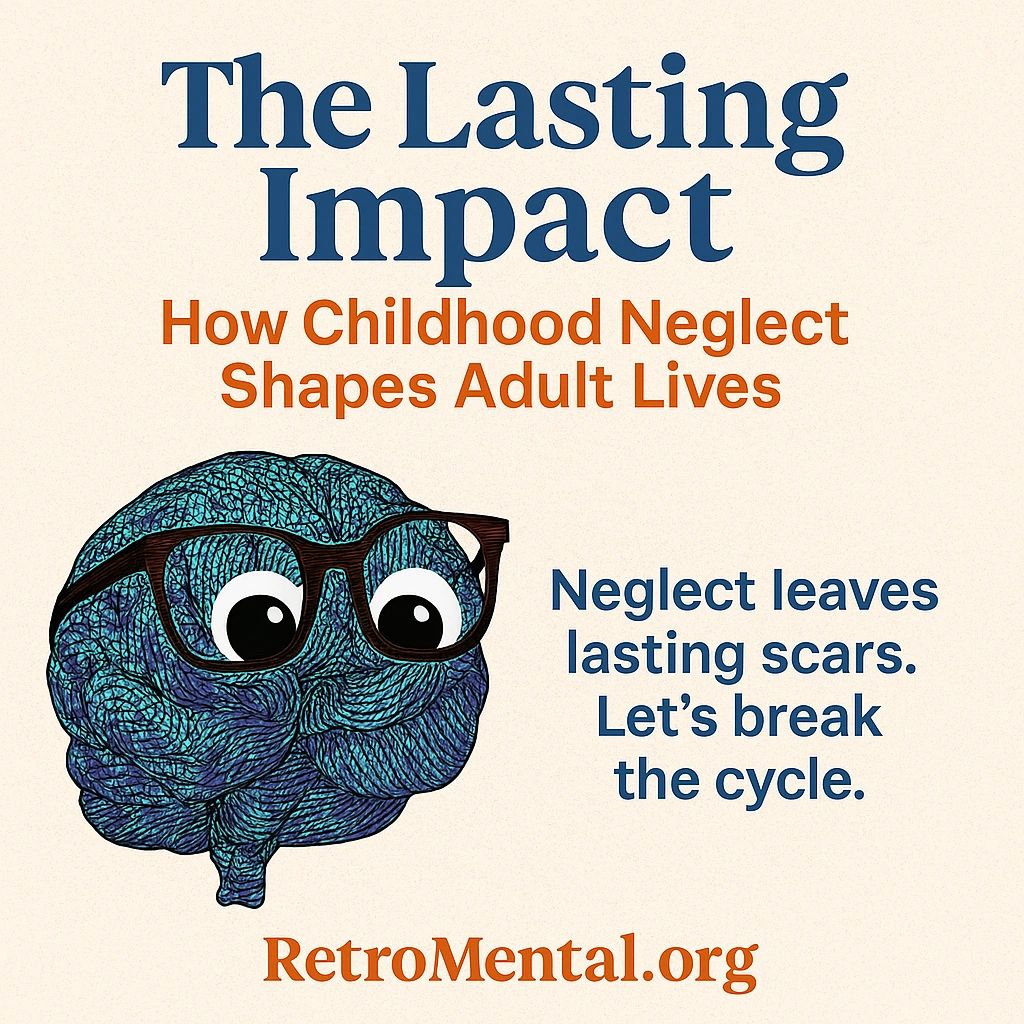
The Lasting Impact: How Childhood Neglect Shapes Adult Lives
Childhood is the foundation upon which a person’s entire life is built. The love, attention, and guidance we receive from our parents and caregivers play a crucial role in shaping our sense of identity, self-worth, emoti...
Childhood is the foundation upon which a person’s entire life is built. The love, attention, and guidance we receive from our parents and caregivers play a crucial role in shaping our sense of identity, self-worth, emotional regulation, and ability to connect with others. But what happens when that foundation is cracked when a child grows up in an abusive or neglectful environment, or without the emotional presence they needed?
Neglect isn’t always loud. Sometimes, it’s the silence. The missed hugs. The absent conversations. The unmet needs. And sadly, the effects of these early experiences don’t fade with time they grow with us.
1. What Is Childhood Neglect?
Childhood neglect can take many forms:
- Physical Neglect: Failing to provide basic needs like food, shelter, or healthcare.
- Emotional Neglect: Withholding affection, validation, or attention.
- Educational Neglect: Not supporting a child’s learning or school involvement.
- Environmental Neglect: Raising children in unsafe or unstable environments (e.g., around substance abuse or domestic violence).
In many cases, neglect is unintentional some parents may be battling their own traumas, stress, or mental health struggles, making it difficult to be present for their children. However, the impact on the child remains the same.
2. How It Affects Development
Children are like sponges absorbing everything, even the things we don’t say. When a child grows up without proper emotional support or in a household filled with chaos or abuse, their brain development and emotional maturity can be deeply affected.
Common outcomes include:
- Difficulty regulating emotions
- Struggles with trust and forming healthy relationships
- Low self-esteem or feelings of worthlessness
- Anxiety, depression, or PTSD symptoms
- Difficulty with concentration and learning
- Hyper independence or people pleasing tendencies
- Increased risk of substance abuse or self-harming behaviors
3. Carrying the Weight into Adulthood
What’s heartbreaking is that many adults don’t realize their current struggles are rooted in childhood neglect.
- Why can’t I connect with others?
- Why do I always feel like I’m not enough?
- Why do I keep sabotaging good things in my life?
These questions often point back to emotional wounds that were never healed. Adults who grew up in neglectful homes may struggle to feel safe, loved, or seen even in healthy environments. Without intervention or support, they may unknowingly pass these wounds onto the next generation.
4. Breaking the Cycle
The good news? Healing is possible.
It starts with awareness and giving yourself permission to acknowledge what happened without guilt or shame.
Steps toward healing include:
- Therapy: Especially inner child or trauma informed therapy
- Journaling: Writing helps process past pain
- Building healthy support systems: Surround yourself with people who see and support you
- Practicing self-compassion: Learning to re-parent yourself
- Setting boundaries: Especially with those who contributed to the harm
5. For Parents Now: What You Can Do Differently
If you’re a parent reflecting on your own childhood, or worried about repeating the cycle this is your opportunity to rewrite the story.
- Be present. Kids don’t need perfection they need presence.
- Validate feelings. Let them know it’s okay to feel.
- Show affection. Hugs, encouraging words, and praise go a long way.
- Apologize when you’re wrong. Teach accountability.
- Ask them how they are and mean it.
Final Thoughts:
Neglect doesn’t just disappear with age. It echoes in our decisions, our relationships, and our self-image. But awareness is the first step to healing. Whether you’re someone who’s still healing from a neglectful childhood, or a parent doing the work to raise your kids differently you are not alone, and your effort to grow is powerful.