Healing Takes Work: You Can’t Recover Without Doing the Work
Nobody tells you this when you decide to heal: it’s going to feel like more work than just staying broken. This is that post.
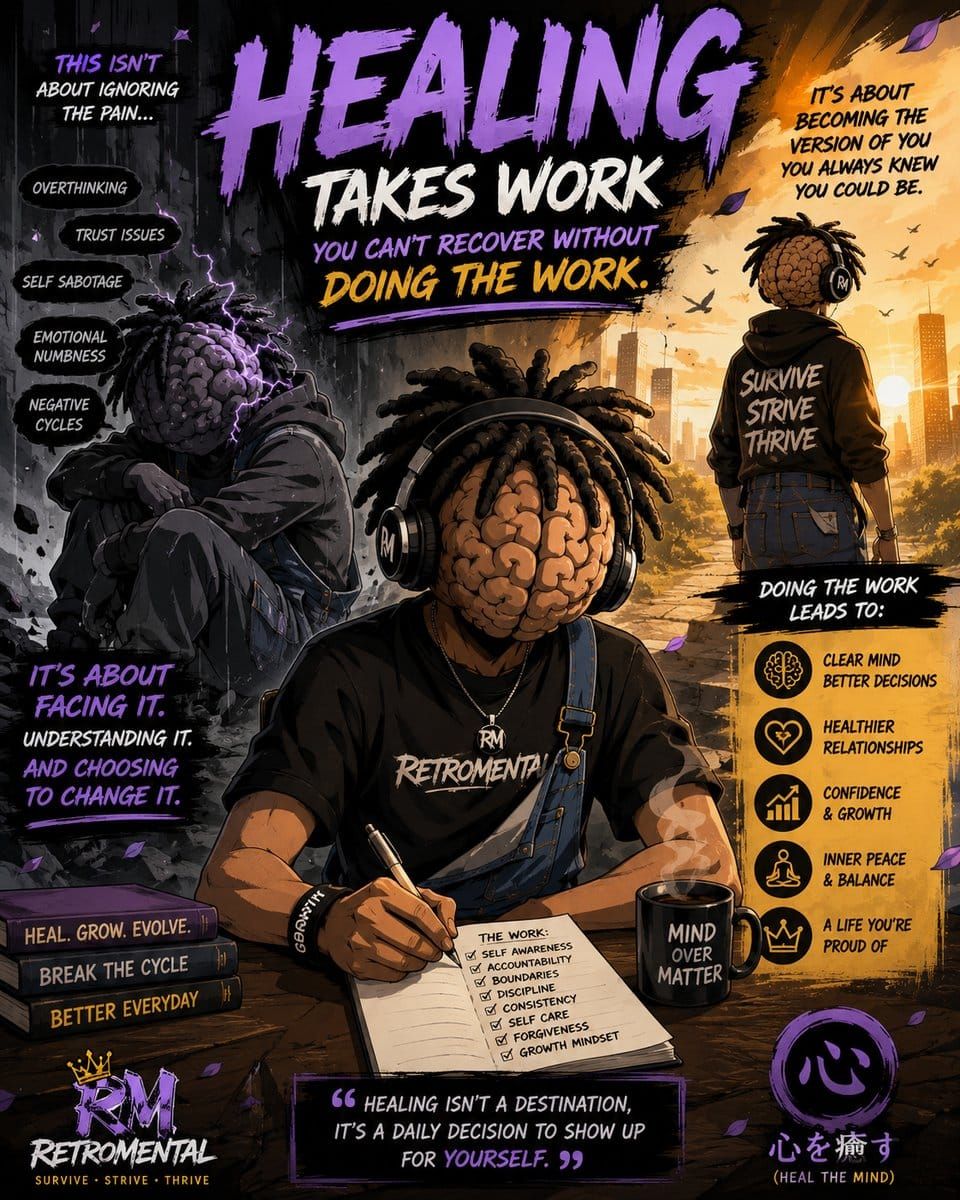
Nobody tells you this when you decide to heal: it's going to feel like more work than just staying broken. And that's the part people skip over. They say "seek help," "take care of yourself," "you'll get through it" — but they leave out the part where healing is a daily, conscious, uncomfortable grind. This is that post.
Surviving Was Necessary
Let's start here. Whatever you did to survive — shutting down emotionally, numbing out, staying busy, keeping secrets, pushing everyone away — it worked. It kept you alive when life was unbearable. You don't need to be ashamed of your survival tactics. They were the right tools at the wrong time.
But surviving and healing are not the same thing. Surviving is treading water. Healing is learning to swim. At some point, you have to stop using old survival instincts in a situation that no longer requires them. That's when the real work begins.
Healing Requires Honesty
You cannot heal what you refuse to look at. That's the hard truth. Healing demands that you sit with yourself — really sit — and get honest about what happened to you, how it changed you, and how you've been carrying it ever since.
That means acknowledging the patterns. The way you push people away before they can leave. The way you overwork to feel worthy. The way you shrink yourself to keep the peace. Honesty isn't about beating yourself up — it's about seeing clearly so you can move differently.
You Have to Keep Practicing
Healing isn't a breakthrough you have once and then you're done. It's a practice. Some days you'll handle your triggers like a pro. Other days an old wound will open and you'll react the exact way you swore you never would again. That's not failure — that's human.
The goal isn't to never struggle. The goal is to recover faster. To recognize what's happening sooner. To choose a different response more often than you used to. Progress is measured in patterns, not perfect moments.
Unlearn Before You Rebuild
A lot of what you learned about relationships, self-worth, love, and safety came from environments that weren't healthy. Before you can build the life you want, you have to unlearn the beliefs those environments planted in you.
Things like: "I have to earn love." "Asking for help is weakness." "If I show them who I really am, they'll leave." "I don't deserve good things." These aren't facts — they're wounds wearing the costume of beliefs. Healing means examining each one and deciding what you actually want to carry forward.
You Don't Want to Hurt Again
One of the biggest blockers to healing is fear. You've been hurt before. Deeply. And part of you would rather stay guarded than risk going through that again. That makes complete sense. But avoidance isn't protection — it's just pain management with a delayed bill.
Healing doesn't guarantee you'll never get hurt again. What it gives you is the confidence that you can handle it if you do. That you won't fall apart. That you know who you are even when things fall apart. That's the real armor.
You Can't Do This Alone
Let me be clear: community is part of the cure. Isolation is not strength. Healing in silence is unnecessarily hard, and it doesn't make you more resilient — it just makes the journey longer.
That doesn't mean you have to tell everyone everything. But it does mean finding at least one safe space — a therapist, a support group, a trusted friend, a community like this one — where you can be honest without performing. We were not built for isolation. We heal in connection.
Stop Measuring Progress by Perfection
If your standard for "healed" is that you never cry, never get triggered, never fall back into old patterns, never have a bad day — you will never feel healed. Because that version of healed doesn't exist.
Real healing looks like: you cried, and then you got up. You slipped, and then you tried again. You had a hard week, and you didn't give up on yourself. Measure your progress by how you treat yourself when things go wrong. That's where growth actually lives.
RetroMental Reflection
Take a moment to sit with these questions. You don't have to answer them out loud — just let them breathe inside you:
- What survival tactic am I still using that I no longer need?
- What truth am I avoiding that's slowing down my healing?
- Who is one person in my life I can be more honest with about how I'm really doing?
- What does "good enough progress" look like for me this week — not someday, but this week?
Healing isn't about who you were or even who you are right now. It's about who you're committed to becoming. And that commitment — shown up for every single day, imperfectly and consistently — is the work.
Final Thought
The people who have done the work of healing don't all look the same. Some are quiet about it. Some talk about it constantly. Some are still in the middle of it. But they share one thing: they chose not to stay where they were.
That choice is available to you. Not once — every day. And on the days it feels impossible, that's exactly when it matters most that you choose it anyway.
You didn't survive everything you've been through just to stay stuck. There is more for you on the other side of this work. Go get it.
Survive · Strive · Thrive — RetroMental